
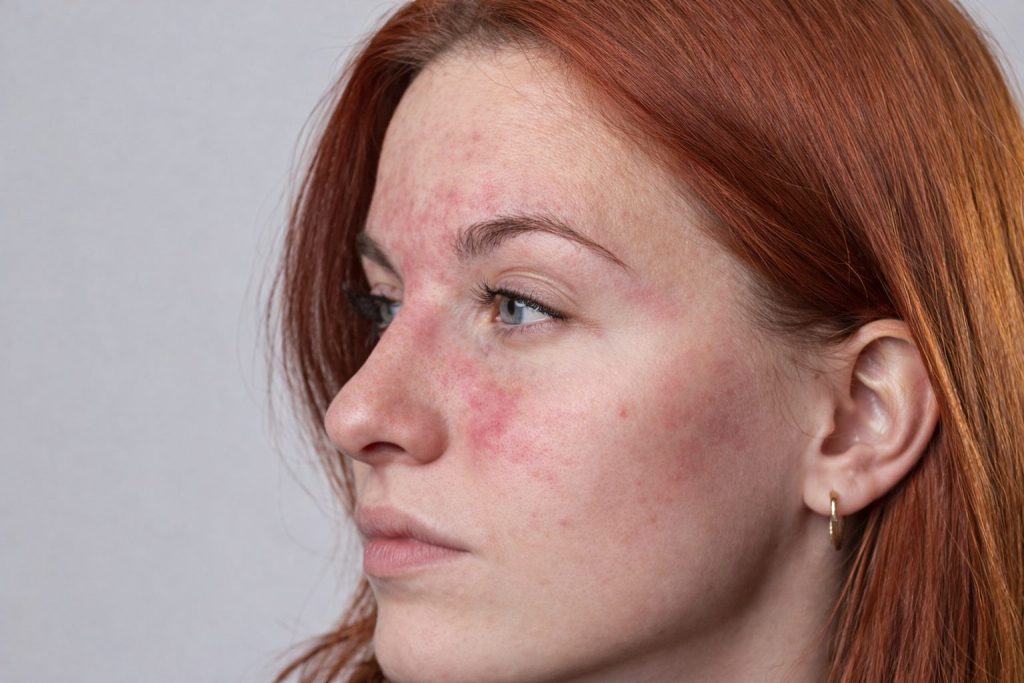
Rosacea Treatment with Regenerative Methods
Rosacea treatment requires long-term control of inflammation and careful management of triggering factors. At Regenics Medical, we apply regenerative rosacea treatment focused on reducing skin reactivity, stabilizing blood vessels, and supporting tissue recovery.
How Rosacea Develops and Progresses
Rosacea can present in several clinical forms. The pattern of the condition depends largely on individual genetic predisposition, lifestyle, and exposure to specific triggering factors. The most common triggers are ultraviolet light and foods rich in histamine. In the same patient, features of more than one form may appear, and the symptoms often change as the condition progresses.
Clinical Forms of Rosacea
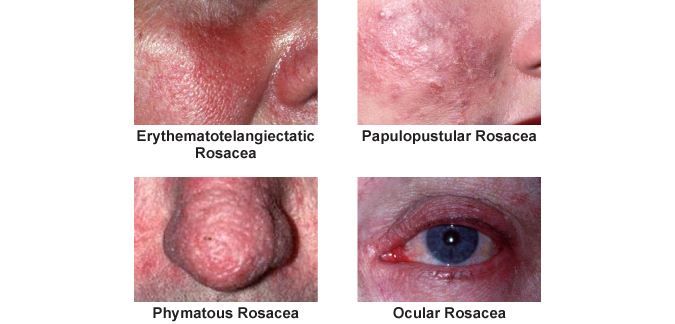
We distinguish four forms of rosacea. In the same patient, different forms may coexist.
- Erythematotelangiectatic (Type 1) : Persistent facial redness with visibly dilated blood vessels.
- Papulopustular (Type 2) : Acne-like inflammatory skin lesions.
- Phymatous (Type 3): Localized, uneven thickening of the skin, most commonly affecting the nose.
- Ocular (Type 4): Affects the eyes and eyelids. The condition presents with redness, tearing, and a bloodshot appearance of the eyes.
Causes and Factors That Worsen Rosacea
Overall, rosacea results from a combination of several interacting factors.
- Genetic predisposition plays a central role. It determines increased skin sensitivity and a tendency toward chronic inflammation. This baseline vulnerability makes the skin more reactive to both internal and external stimuli.
- Chronic inflammatory activity further sustains the condition. The skin releases increased amounts of inflammatory molecules, known as inflammatory mediators, which maintain persistent redness and heightened sensitivity.
- A chronic local infection also contributes, most commonly involving microscopic skin mites called Demodex. These organisms support an inflammatory environment in the skin and can significantly worsen symptoms.
- Hormonal imbalance influences the course of rosacea at different stages of life. In women, the effect is often more pronounced due to cyclical changes in sex hormones. In men, hormonal shifts occur more gradually but still affect skin reactivity over time.
- External triggering factors play an additional role. Certain medications, such as corticosteroids and beta-blockers, can provoke or aggravate symptoms. Foods rich in histamine, including aged cheeses, fermented foods, cured meats, and chocolate, are common dietary triggers. Ultraviolet exposure and chronic stress further contribute by activating or sustaining inflammatory pathways in the skin.
Recommendations for Prevention and Daily Care
With rosacea, the skin should be cleansed using a gentle product free of fragrance and alcohol. Hot water should be avoided, and skincare products should not contain irritating ingredients. Regular use of sun protection is essential. Limiting alcohol intake and foods rich in histamine, such as fermented and aged foods, is recommended. Managing factors such as stress and sudden temperature changes is also important, as these commonly worsen symptoms.
Our Regenerative Rosacea Treatment Approach
At Regenics Medical, we perform a comprehensive assessment of the affected tissues as well as the patient’s overall health status. When symptoms of rosacea are present, we evaluate all factors that may trigger or sustain the inflammatory condition of the skin and eyes. If there are coexisting medical conditions, we analyze how the prescribed medications influence skin reactivity and disease activity. We understand how uncomfortable rosacea can be, which is why our approach is deliberately gentle and carefully tailored.
Our restorative and regenerative work focuses primarily on controlling inflammatory processes, immune modulation through local correction of autoimmune activity, and management of infectious components that contribute to disease persistence.
Following this detailed evaluation, we develop a personalized plan for skin tissue restoration, designed to address the specific mechanisms driving rosacea in each individual patient.
Advantages of the Therapies Used at Regenics Medical
The therapeutic approach to rosacea is determined by the underlying causes and the areas involved. The primary goals are to control inflammation, regulate vascular reactivity, manage the infectious component, and restore local immune balance. At the same time, the skin’s natural regenerative processes are actively stimulated.
We use cold atmospheric plasma with PlasmaOne to control bacteria, fungi, and microscopic mites. When indicated, light therapy with Fletech photoconverter gels is added to enhance the anti-inflammatory and immunomodulatory effect. To support skin repair and long-term stabilization, we apply autologous growth factors using Endoret PRGF in the most appropriate form for each case. In ocular rosacea, treatment may also include individually prepared serums and eye drops derived from the patient’s own plasma.
These therapies are non-invasive or minimally invasive and are associated with a short recovery period, typically up to two to three days.
Key Therapeutic Goals
- Control and prevention of infections
- Regulation of blood flow and vascular reactivity
- Balancing local immune function
- Support of cellular and tissue regeneration
- Provision of the necessary growth factors
- Absence of significant side effects
Recovery time
Because Dr. Tsaribashev’s method of tissue restoration relies on the body’s own regenerative mechanisms, a short recovery period can be expected after the therapies. In most cases, recovery takes place within two to three days and only rarely extends up to one week.
Frequently Asked Questions (FAQ)
Is rosacea contagious?
No. Rosacea is not a contagious condition and cannot be transmitted through contact.
Is special home care required?
Yes. Part of the treatment includes individualized recommendations for home care and avoidance of triggering factors. In some patients, specially prepared serums or eye drops are also used.
Are the procedures suitable for ocular rosacea?
Yes. When the eyes are affected, the therapy is adapted accordingly and, when necessary, carried out in collaboration with an ophthalmologist.
Can rosacea be completely cured?
Rosacea is a chronic condition. The goal of treatment is long-term control of inflammation and symptoms, as well as stabilization of the skin.
What worsens rosacea?
The most common factors include sun exposure, sudden temperature changes, stress, alcohol, spicy and histamine-rich foods, as well as certain medications.
Are rosacea and acne the same condition?
No. Although some forms of rosacea may resemble acne, the two conditions have different underlying mechanisms and require different therapeutic approaches.