
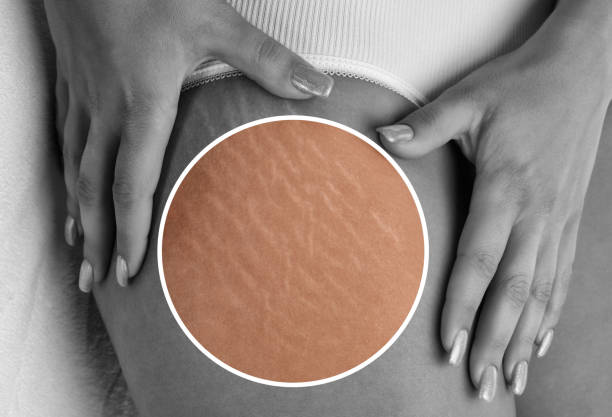
Stretch Mark Therapy
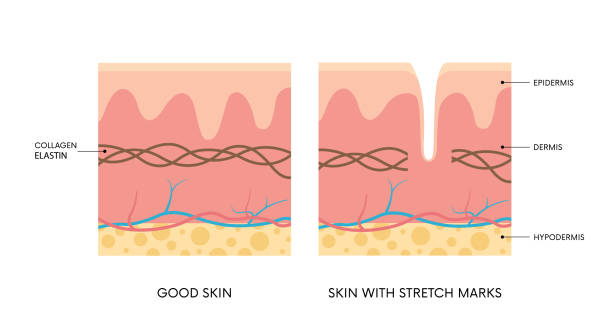
The causes of stretch marks are varied. At the core of the process lies instability in the collagen and elastin fibers. These two structural proteins are essential for the skin’s density and elasticity, as well as for its ability to withstand physical stress, such as tissue stretching during pregnancy or significant weight gain.
Causes and Key Factors Behind the Development of Stretch Marks
The following factors contribute to the development of stretch marks:
- Genetic predisposition: Your genetic makeup often encodes a relative “weakness” in collagen and elastin fibers. In many cases, a family history reveals a similar tendency toward the development of stretch marks.
- Hormonal balance: Key periods such as puberty, pregnancy, and menopause involve significant hormonal changes that can negatively affect the production of collagen and elastin capable of withstanding stretching.
- Growth factors: Stem cells in the skin and bone marrow primarily produce these growth factors. Growth factors regulate cellular functions, including the activity of fibroblasts, the cells responsible for synthesizing collagen and elastin.
- Unhealthy lifestyle: Excess body weight leads to increased tissue stretching. Lack of physical activity reduces skin and subcutaneous firmness. High sugar intake promotes glycation, a process that damages collagen fibers. Smoking triggers inflammatory processes and accelerates the breakdown of collagen and elastin. All of these factors contribute to the development of stretch marks.
- Medical conditions and medications: Certain autoimmune diseases, as well as prolonged use of corticosteroids such as cortisone, can impair the structure and regenerative capacity of the skin.
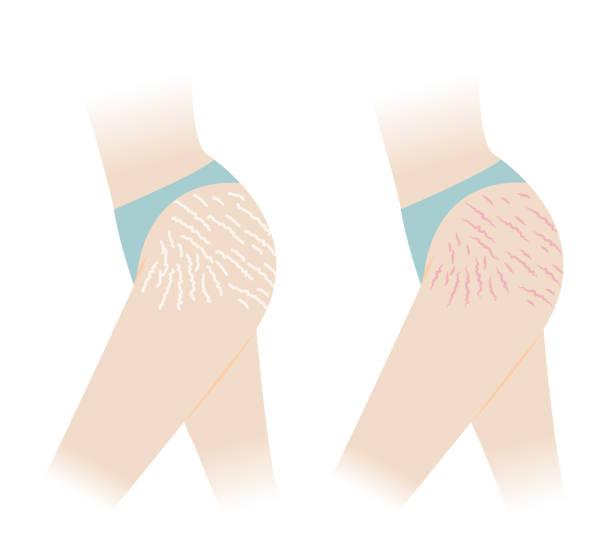
- Types of stretch marks: Based on their appearance, stretch marks are classified as red (new, associated with active inflammation) and white (older, characterized by an established fibrotic structure).
Restoration and Regeneration | Our Approach to Stretch Marks
At Regenics Medical, we perform a comprehensive assessment of the tissues and functional characteristics of the areas affected by stretch marks, carefully evaluating the factors that have contributed to their development.
Based on this analysis, we design a personalized plan aimed at restoring the skin’s structure and function. We pay particular attention to the specific biological processes associated with different stages of a woman’s life and adapt the therapy accordingly.
We apply a similar approach for men. However, male skin is naturally denser and more elastic.
Our therapeutic plans target the individual mechanisms underlying the formation of stretch marks and rely on scientifically grounded methods to reduce their visibility and improve skin quality.
Gentle Regenerative Therapies for Restoring Skin Structure in Stretch Marks
Depending on the underlying cause of the stretch marks, the depth of tissue involvement, and the size of the affected area, we apply the technologies of Regenics Medical to activate the body’s own regenerative capacity.
We use treatments based on autologous growth factors (Endoret™), light therapy with chromophore gels that transmit photon energy (Fletech™), and cold atmospheric plasma (PlasmaOne™).
We begin by improving tissue trophism. Initially, Endoret™ technology reduces inflammation, particularly in red stretch marks. Furthermore, we use autologous growth factors in different formulations. These modulate the immune response and stimulate resident stem cells.
We also apply a specially prepared serum derived from the patient’s own plasma (Endoret™) to support cellular repair. Deeper defects, typically seen in white stretch marks, may be filled with a plasma-based filler rich in the patient’s own growth factors.
Cold atmospheric plasma (PlasmaOne™) is used to enhance local blood circulation in depth, improving oxygen and nutrient exchange within the tissues.
Targeted LED light delivered through a specialized photoconverter gel provides an additional anti-inflammatory effect and significantly stimulates collagen production, supporting tissue strengthening and restoration (Fletech™).
Advantages of the Therapies Applied at Regenics Medical
- Our procedures are minimally invasive. Consequently, they involve a short recovery period of two to three days.
- They are aligned with physiological principles and the body’s natural regenerative processes.
- Therapy supports improved local blood circulation and tissue nourishment, creating a more favorable environment for repair.
- By stimulating resident stem cells, we encourage cellular and tissue regeneration.
- The approach helps balance local immune activity and reduce inflammatory responses.
- Cellular energy production is enhanced, supporting more effective tissue recovery.
- Autologous growth factors are provided to support the restoration of skin structure.
- Skin texture and elasticity are improved over time.
- Therapy also aims to stabilize existing stretch marks and reduce the likelihood of new ones forming.
- When appropriate and requested, local hormonal balance can be assessed and supported.
- The procedures are associated with a low risk profile and do not involve serious side effects.
Duration and Expected Results
- The duration of each therapy session ranges between 45 minutes and 1.5 hours.
- Different therapies may be combined within a single session, which can extend the overall treatment time accordingly.
- Correction of existing stretch marks typically requires several sessions over a period of several weeks to approximately three months.
- In individuals with a known tendency to develop stretch marks, early intervention is recommended to prevent their progression and deepening.
Recovery Time
Dr. Tsaribashev’s method relies on your body’s natural regeneration. Therefore, you can expect a short recovery period of two to three days.
These mild and temporary reactions are natural, resolve on their own, and do not require special care or additional intervention.
The overall course of tissue regeneration depends on the size of the treated area and, most importantly, on the depth of the affected tissues. The process develops gradually over several weeks to several months, and in cases of very deep or extensive stretch marks, it may continue for up to one year.
Frequently Asked Questions (FAQ)
What Are Stretch Marks and Why Do They Appear?
Stretch marks are microscopic tears in the collagen and elastin fibers that occur when the skin is stretched rapidly, such as during puberty, pregnancy, or sudden changes in body weight.
Can sun exposure worsen stretch marks?
Yes. Ultraviolet (UV) radiation accelerates the breakdown of collagen and elastin, which can make stretch marks more pronounced and deeper. For this reason, worsening of existing stretch marks or the appearance of new ones is often observed after the summer season.
Are the therapies suitable for prevention if I am prone to stretch marks?
Yes, early intervention is recommended in individuals with a known tendency to develop stretch marks, for example during pregnancy or when significant weight changes are expected. It helps maintain skin stability and elasticity and may reduce the risk of new stretch marks forming.
Are the therapies painful and are there any side effects?
The procedures are non-invasive or minimally invasive, do not require anesthesia, and are not associated with serious side effects. Mild redness or temporary skin sensitivity may occur after treatment, but these reactions resolve quickly and do not require special care.